








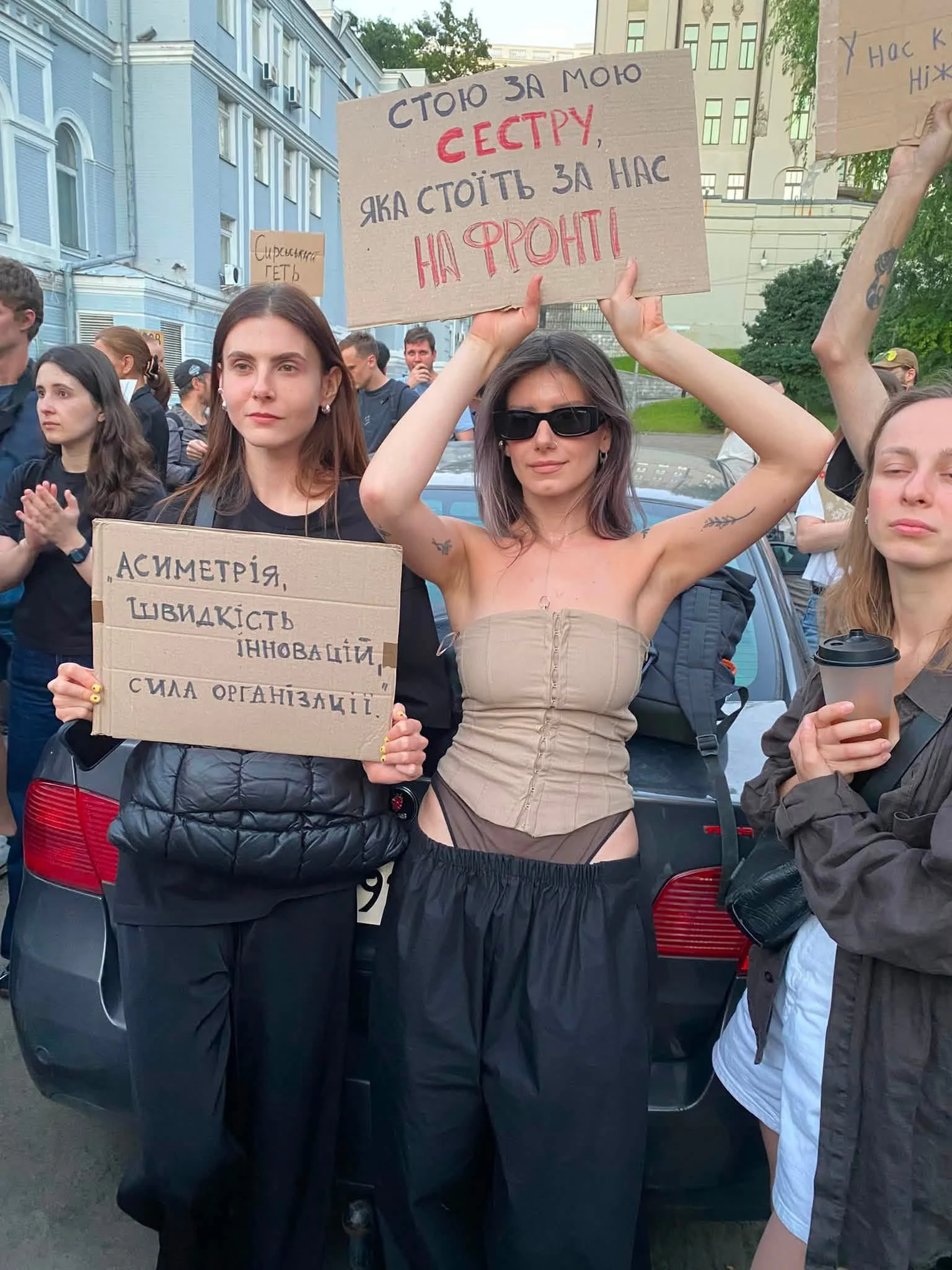

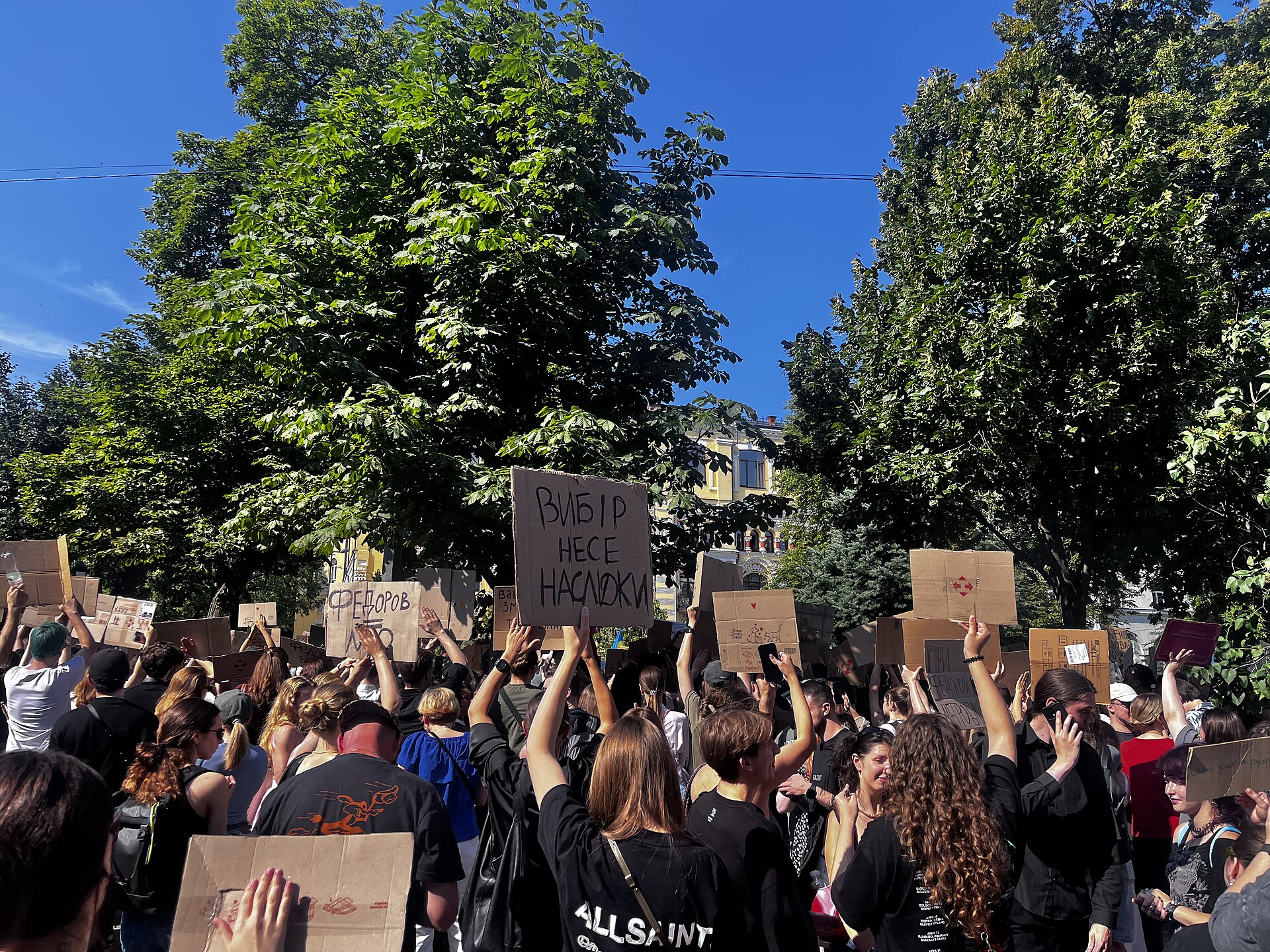
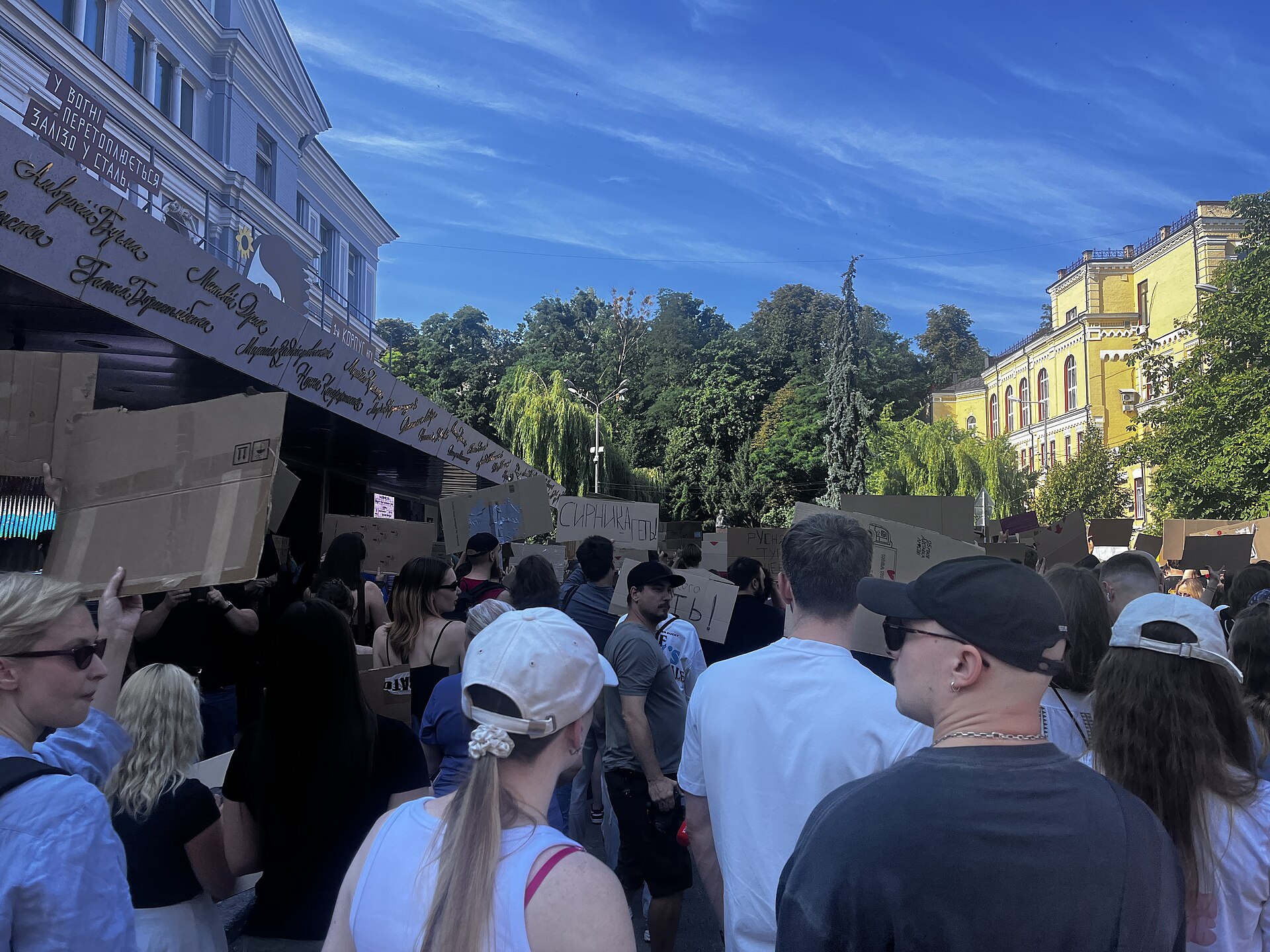
KYIV — A sudden wave of youth-led demonstrations has exposed a fracture in Ukraine’s wartime political consensus. The protests, quickly nicknamed the “Carton Revolution” because of their hand-lettered cardboard signs, erupted after President Volodymyr Zelenskyy removed the young and popular defense minister Mykhailo Fedorov in the July 2026 government reshuffle.
This is not an armed uprising, nor is it evidence that Ukraine has turned against its war effort. It is a highly visible challenge to the political order around the presidency—and an expression of impatience from a generation demanding speed, competence and a credible vision of life after the war.
1.Fedorov: the “iPhone minister”
At 35, Fedorov represents a different political generation. Before taking over the Defense Ministry in January 2026, he spent years leading Ukraine’s digital transformation. He speaks the language of startups, systems and measurable outcomes rather than traditional political ritual.
That image has become central to the demonstrations. Protesters are not simply defending a former minister; many are defending a model of government they associate with efficiency, connectivity and a break from post-Soviet bureaucracy.

2.Diia and the state in a smartphone
Fedorov’s reputation rests heavily on Diia (Дія), the digital platform that brought identity documents, licenses, registrations, tax services and other state functions onto Ukrainians’ phones. The platform did not eliminate corruption, but it reduced many routine points of contact where delay, discretion and petty bribery could thrive.
For supporters, Diia proved that Ukraine could modernize faster than many established Western bureaucracies. Fedorov did not merely promise a digital state; his team delivered a system millions of Ukrainians use.
3.A generational and aesthetic break
Political movements are also visual. Cardboard placards, handwritten slogans and young faces have created an image that contrasts sharply with the olive-drab language of permanent wartime mobilization. The demonstrations communicate a desire not only to survive, but to live in a modern, open and recognizable European country.
This is why the movement’s symbolism matters. It replaces official choreography with improvised civic expression—and turns ordinary packaging material into a sign of political agency.
4.Technology cannot win the war alone
Fedorov is a technocrat, not a battlefield commander. His drone initiatives, procurement reforms and defense-technology platforms were important, but software and organizational speed cannot substitute for military leadership, manpower, logistics or strategy.
The enthusiasm surrounding him therefore says as much about public psychology as it does about his record. Fedorov has become a symbol of future competence at a moment when many Ukrainians are exhausted by stalemate, casualties and institutional friction.
5.Zelenskyy’s diminished halo
Zelenskyy remains the central figure of Ukrainian resistance, but the assumption that he is politically indispensable is being tested. Prolonged mobilization, corruption scandals and the grinding duration of the war have changed the public atmosphere.
The protests do not prove that the president has lost the country. They do show that wartime unity no longer shields every personnel decision from scrutiny—and that citizens increasingly distinguish support for Ukraine from unconditional support for its leadership.
6.Did Zelenskyy create his own rival?
Fedorov’s rise carries a sharp irony. Zelenskyy gave him the platforms on which he built his reputation: first digital government, then drones and defense reform. The more visible those projects became, the more Fedorov appeared indispensable to a public hungry for measurable success.
Whether Fedorov wants a presidential future remains unproven. But his dismissal transformed a disciplined technocrat into a political symbol—and may have increased, rather than reduced, his national profile.
7.Frustration with the old guard
The “Carton Revolution” is also a generational protest against recycled elites, opaque institutions and the slow machinery that has constrained Ukraine since independence. Fedorov’s supporters see him as part of a post-Maidan cohort shaped by Western integration, digital culture and low tolerance for bureaucratic delay.
Zelenskyy himself entered politics as an outsider. Yet after years in office, his administration is now judged as the establishment—and held responsible for the compromises and failures of the system it promised to transform.
8.The search for a “decent peace”
Behind the slogans lies a difficult public demand: security without endless sacrifice, and peace without surrender. Fedorov’s appeal is rooted in the hope that competence, technology and better relations with Western partners can produce options beyond a permanent war of attrition.
No app can resolve the strategic dilemmas facing Ukraine. But political symbols matter, especially during exhaustion. Fedorov currently embodies the idea that the country’s future can be engineered rather than merely endured.
9.Corruption and the broken promise
Corruption remains the movement’s most combustible fuel. Ukrainians accepted extraordinary sacrifice believing that war would accelerate—not postpone—the construction of a cleaner state. Every procurement scandal and abuse inside recruitment systems weakens that bargain.
The cardboard signs are therefore more than support for one former minister. They are a demand to return to the central promise of the Maidan era: transparent institutions, accountable power and a decisive break with the habits of the past.
The “Carton Revolution” may fade, or it may become the opening chapter of Ukraine’s next political cycle. Either way, it has established one fact: the country’s young citizens intend to shape the postwar order, not wait quietly for it to be handed to them.
Editorial note: This is an analysis of a rapidly developing political story. Interpretations of the demonstrations and the political intentions of the figures involved remain contested. Reporting context was checked against contemporary coverage, including Le Monde. Reusable archival photographs are credited under their respective Creative Commons licenses.
Ask AI about this story
Answers are based on this article and SN Media’s related coverage. AI can make mistakes.
Frequently asked questions
Why did the youth protests in Kyiv, called the 'Carton Revolution,' begin?
The protests erupted after President Zelenskyy dismissed Mykhailo Fedorov, a young and popular defense minister associated with digital modernization and government efficiency, sparking youth frustration with the political status quo.
What does Mykhailo Fedorov symbolize for the protesters?
Fedorov represents a generational and political break from traditional bureaucracy, embodying efficiency, digital innovation through platforms like Diia, and a vision of a modern, open European Ukraine.
Does the article suggest that Zelenskyy's leadership is in jeopardy due to these protests?
While Zelenskyy remains central to Ukrainian resistance, the protests indicate that wartime unity no longer guarantees unconditional support for his leadership, reflecting growing public scrutiny of political decisions during prolonged conflict.
What are the broader demands and frustrations behind the 'Carton Revolution' beyond Fedorov's dismissal?
The movement expresses impatience with recycled elites, corruption, slow institutions, and a desire for a 'decent peace'u2014security without endless sacrificeu2014and hopes that competence and technology can offer alternatives to ongoing war attrition.
Continue the story
 LATEST
The Rising Risk for Comedians Under Authoritarian Regimes: Turkey’s Crackdown on Free Speech
LATEST
The Rising Risk for Comedians Under Authoritarian Regimes: Turkey’s Crackdown on Free Speech
- LATEST The Growing Influence of Russian-Aligned Lobbyists in Washington
- LATEST The Paradox of Prosperity: Why Economic Growth Isn’t Boosting Trump’s Popularity
- LATEST Kruk’s Strategic Pivot: From European Stronghold to Anglo-American Markets
- LATEST How Rising Bond Yields Are Reshaping European Equity Markets