




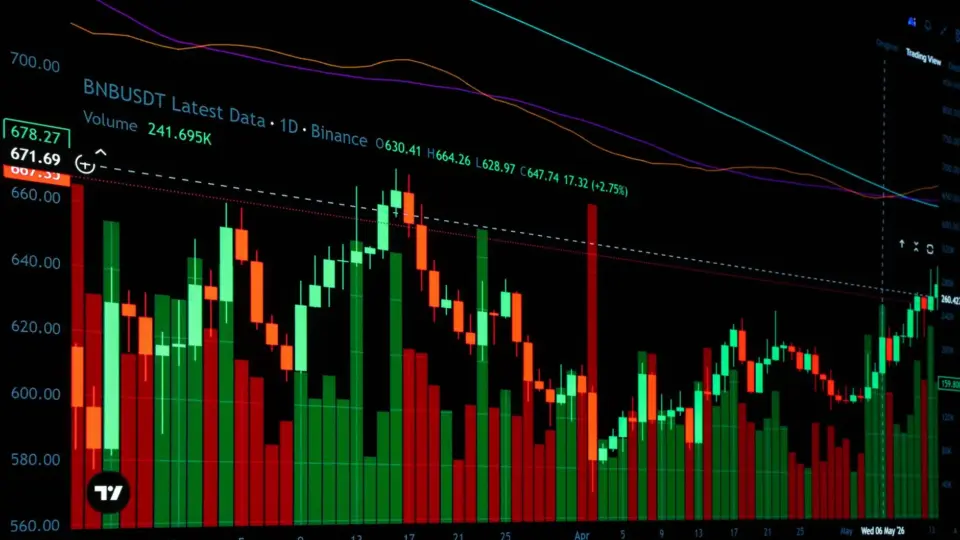




- Declining oil prices have contributed to the recent rise in U.S. Treasury yields by reshaping inflation outlooks.
- Energy market dynamics are increasingly intertwined with fixed income trends, influencing investor risk assessments and monetary policy expectations.
- The fall in oil prices reflects broader shifts in global demand and supply, complicating traditional inflation and growth forecasts.
How Falling Oil Prices Are Redefining Treasury Yield Trends
What happened
In recent weeks, U.S. Treasury yields have reversed a downward trajectory, climbing after a pronounced decline over the previous month. This shift coincided with a significant drop in oil prices, which have tumbled due to a combination of weakened global demand signals and persistent supply-side pressures. The correlation between the two is more than coincidental; oil price movements have directly influenced investor expectations about inflation and economic growth, which in turn have reshaped the fixed income market’s pricing dynamics.
Why it matters
Treasury yields serve as a benchmark for borrowing costs across the global financial system, reflecting collective market perceptions of risk, inflation, and monetary policy direction. When oil prices fall sharply, they traditionally signal easing inflation pressures, which might be expected to suppress yields. Yet, the recent yield increase suggests a more nuanced interaction: investors are recalibrating their forecasts not only about consumer prices but also about economic momentum and Federal Reserve policy responses. This has implications for portfolio management, government financing costs, and the broader economic outlook.
Industry context
The energy sector has long exerted outsized influence on inflation metrics because oil prices directly affect transportation, manufacturing, and general consumer prices. However, in a complex global economy marked by supply chain realignments, geopolitical tensions, and variable demand from emerging markets, the linkages have become less predictable. Fixed income markets are adapting to these evolving conditions, where central banks face competing pressures: the need to control inflation without derailing growth. Oil price movements, therefore, act as a critical input in this balancing act, impacting policy deliberations and market sentiment.
Analysis
The recent surge in Treasury yields amid falling oil prices can be understood through several mechanisms. Firstly, the decline in oil has not uniformly translated into lower inflation expectations; instead, it has highlighted supply-side uncertainties and potential shifts in consumer behavior that may offset energy cost savings. Secondly, investors appear to be pricing in a more hawkish Federal Reserve stance, anticipating that lower energy costs will reduce some inflationary pressures but not enough to deter continued monetary tightening. Lastly, global factors such as China’s economic performance and European energy policies complicate the outlook, making the U.S. Treasury market a focal point where these diverse variables converge.
This dynamic underlines a departure from simpler historical patterns where oil price drops straightforwardly eased inflation fears and pushed yields down. The current environment reflects a more fragmented interaction between commodity markets and fixed income, where market participants weigh inflation data against geopolitical risks and central bank communications with greater scrutiny.
What to watch next
Market observers should focus on forthcoming inflation reports, particularly core measures excluding volatile energy components, to gauge whether falling oil prices translate into sustained disinflation. Federal Reserve communication will also be critical; any signals about the trajectory of interest rates amid a shifting energy landscape will influence Treasury yield trends. Additionally, developments in global energy supply—such as OPEC+ production decisions or alternative fuel adoption—and geopolitical tensions in key oil-producing regions could further recalibrate market expectations. Ultimately, the complex interplay between oil prices and Treasury yields will remain a barometer for broader economic and policy uncertainties in the months ahead.
Ask AI about this story
Answers are based on this article and SN Media’s related coverage. AI can make mistakes.
Frequently asked questions
How have falling oil prices influenced recent U.S. Treasury yield movements?
Falling oil prices have contributed to the recent rise in U.S. Treasury yields by reshaping investor expectations about inflation and economic growth, leading to a recalibration of fixed income market pricing.
Why did Treasury yields rise despite the traditional expectation that lower oil prices reduce inflation pressures?
The rise in yields amid falling oil prices reflects a more complex interaction where supply-side uncertainties, potential changes in consumer behavior, and expectations of a hawkish Federal Reserve stance offset the inflation-easing effect of lower energy costs.
What global factors complicate the relationship between oil prices and Treasury yields?
Global factors such as Chinau2019s economic performance, European energy policies, geopolitical tensions in oil-producing regions, and supply chain realignments add complexity to the link between oil prices and Treasury yields, making market reactions less predictable.
What should market observers monitor to understand future Treasury yield trends in relation to oil prices?
Observers should watch upcoming inflation reports excluding volatile energy components, Federal Reserve communications on interest rates, OPEC+ production decisions, alternative fuel adoption, and geopolitical developments in key oil-producing regions to gauge how oil prices will continue to impact Treasury yields.
Continue the story
 BACKGROUND · How we got here
How Rising Oil Prices Are Reshaping Global Bond Markets Ahead of Fed Decisions
- BACKGROUND · How we got here How Falling Oil Prices Are Reshaping Federal Reserve Interest Rate Expectations
- BACKGROUND · How we got here How Rising Treasury Yields Are Reshaping Global Investment Strategies
- BACKGROUND · How we got here Flight to Safety: How Tech Stock Turbulence Boosts US Treasury Demand
- BACKGROUND · How we got here How Falling Oil Prices Are Reshaping US Stock Market Sentiment