




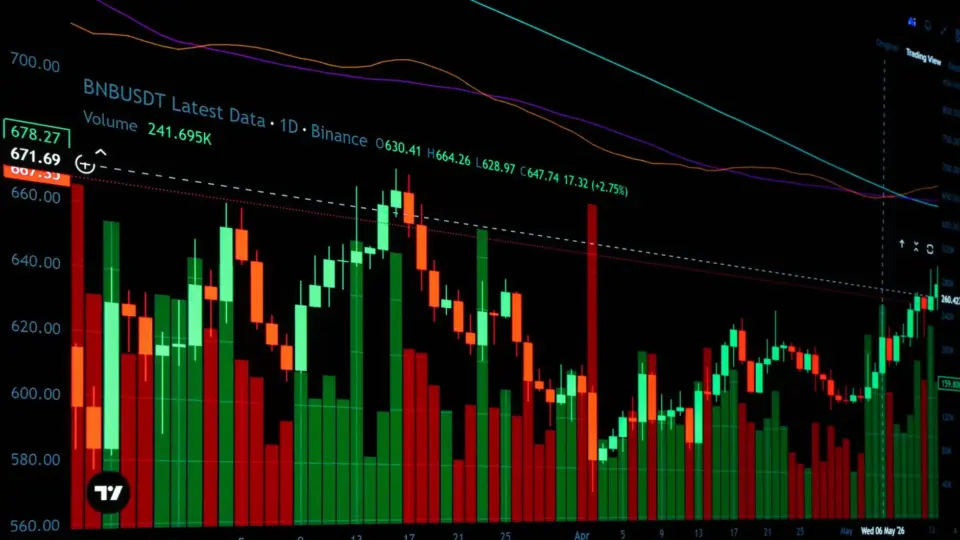




- Wall Street’s $5.7 trillion sell-off reflects rapid investor reassessment of AI-driven growth prospects.
- Valuation models for AI-heavy tech firms are under pressure from rising interest rates and regulatory uncertainties.
- The rout reveals emerging tensions between speculative enthusiasm and sustainable innovation funding.
- Future tech sector dynamics will hinge on corporate earnings performance and the evolution of AI’s regulatory landscape.
The Unraveling of AI Hype: What the $5.7 Trillion Market Rout Means for Tech Investing
What happened
In a staggering shift emblematic of the volatility surrounding artificial intelligence (AI) investments, global equity markets witnessed a $5.7 trillion contraction linked to tech stocks heavily exposed to AI narratives. This sell-off, one of the most severe in recent memory, unfolded over several trading sessions and saw marquee companies shed significant portions of their market capitalization. The retreat was not isolated but broad-based, extending from established technology giants to newer entrants whose valuations had ballooned on expectations of AI-driven growth. This market correction has recalibrated investor expectations and prompted a reassessment of the risk-reward profiles associated with AI-centric equities.
Why it matters
The magnitude of this sell-off signals a profound shift in Wall Street’s collective psyche regarding AI’s immediate and mid-term impact on corporate profitability and economic growth. For investors, the rout underscores the fragility of valuations premised on speculative growth rather than concrete earnings. It also highlights the sensitivity of tech sector valuations to macroeconomic variables such as rising interest rates, which increase the discount applied to future earnings. Beyond portfolio adjustments, this event has implications for capital allocation across the technology landscape, potentially constraining funding for AI innovation and prompting scrutiny over the sustainability of recent investment trends.
Industry context
The tech sector’s rapid embrace of AI has been fueled by breakthroughs in generative models and machine learning applications, catalyzing a flurry of investor enthusiasm since 2023. This enthusiasm was reflected in soaring share prices for companies positioning themselves as AI leaders, often supported by optimistic revenue forecasts and aggressive expansion strategies. However, the industry has long contended with regulatory uncertainties, data privacy concerns, and the challenge of translating AI advancements into scalable, profitable business models. The recent market correction crystallizes these tensions, coming at a time when central banks are tightening monetary policy and inflation remains a global concern, both of which exert downward pressure on high-growth valuations.
Analysis
The sell-off is a manifestation of the interplay between speculative exuberance and foundational economic realities. Investors initially rewarded AI pioneers with premium valuations based on projected exponential growth and transformative potential. Yet, as interest rates climbed, the present value of distant earnings diminished, forcing a reassessment of what constitutes a justified valuation multiple. Concurrently, regulatory scrutiny—ranging from antitrust investigations to ethical considerations surrounding AI deployment—has introduced additional uncertainty, prompting risk-averse capital to retreat. This environment has exposed the limitations of relying solely on narrative-driven investment, emphasizing the importance of tangible financial performance and risk management. The correction may also catalyze a more disciplined approach to AI investing, where due diligence and fundamental analysis regain prominence over hype.
What to watch next
Market participants will be closely monitoring upcoming quarterly earnings reports from key AI-exposed firms to gauge the translation of AI investments into sustainable revenue streams. Additionally, regulatory developments—particularly in the United States, European Union, and China—will shape investor confidence by clarifying the permissible scope of AI applications and data usage. The trajectory of monetary policy remains a critical variable, as further interest rate hikes or cuts could either exacerbate or alleviate valuation pressures. Finally, the sector’s innovation pipeline and its ability to deliver practical, scalable AI solutions will be pivotal in restoring investor faith and setting the stage for the next phase of technology sector growth.
Ask AI about this story
Answers are based on this article and SN Media’s related coverage. AI can make mistakes.
Frequently asked questions
What caused the $5.7 trillion sell-off in AI-related tech stocks?
The sell-off was caused by a rapid reassessment of AI-driven growth prospects amid rising interest rates and regulatory uncertainties, leading investors to question speculative valuations and focus more on concrete earnings performance.
How has the market correction affected investor sentiment toward AI investments?
Investor sentiment shifted from speculative enthusiasm to caution, highlighting the fragility of valuations based on projected growth rather than actual profitability and increasing scrutiny on sustainable innovation funding.
What role do regulatory developments play in the future of AI sector valuations?
Regulatory developments, especially in the US, EU, and China, are expected to influence investor confidence by defining the permissible scope of AI applications and data usage, thus shaping the risk environment for AI investments.
What factors will determine the future dynamics of the tech sector after this sell-off?
Future dynamics will depend on corporate earnings reports from AI-exposed firms, the evolution of AI-related regulations, monetary policy changes affecting interest rates, and the sectoru2019s ability to deliver scalable, practical AI solutions.
Continue the story
 BACKGROUND · How we got here
The Risks of AI-Driven Growth: How Investor Sentiment is Shifting in US Markets
- BACKGROUND · How we got here AI Investment Worries Trigger Sell-Off in US Tech Stocks
- BACKGROUND · How we got here Wall Street Giants Debate the Sustainability of the AI Boom
- BACKGROUND · How we got here The Sustainability of the AI Investment Boom: Market Reactions and Future Outlook
- BACKGROUND · How we got here Analyzing October’s AI-Driven Market Correction: What Hedge Fund Losses Reveal