








In Astana, the roadmap fits into a pyramid. At its base are energy and infrastructure. Above that come semiconductors and computing power, followed by data and large language models, then platforms and, at the very top, artificial intelligence applications and agents.
Presented under the auspices of Kazakhstan’s Ministry of Artificial Intelligence and Digital Development, the chart neatly captures the country’s ambition: not simply to host a handful of startups, but to build the different layers of an AI economy, from power generation all the way up to digital services.
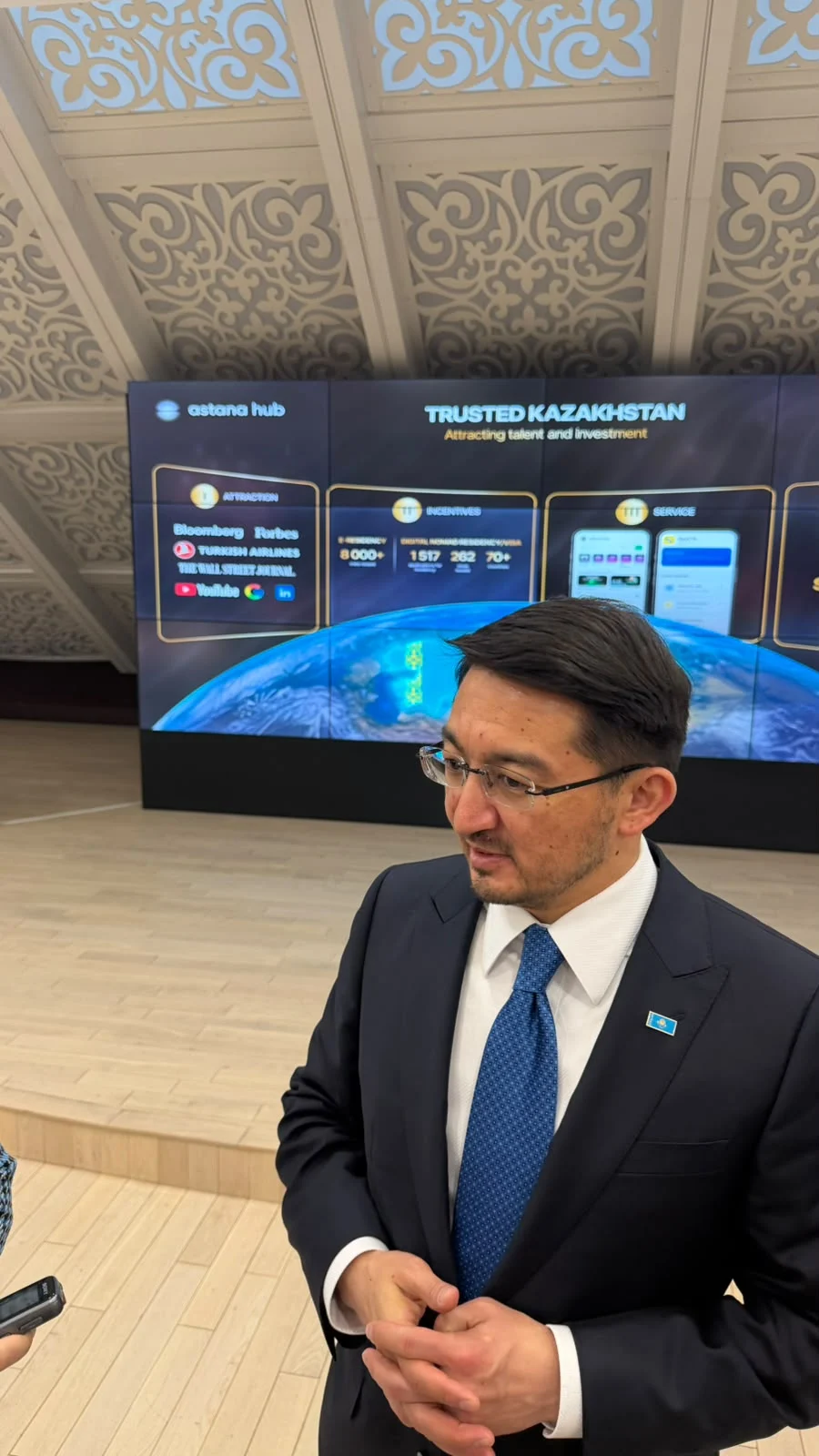
Astana Hub sits at the heart of that strategy. The technology park says it is now home to more than 2,500 local and international companies. Over eight years, its participants have generated $2 billion in export revenue and raised $998 million in investment. More than 1,600 startups have also benefited from its programs.
Corporate Tax Cut to Zero
The most immediately striking selling point is tax. For companies that meet the scheme’s eligibility criteria, Astana Hub offers a 0% corporate income tax rate on qualifying activities.
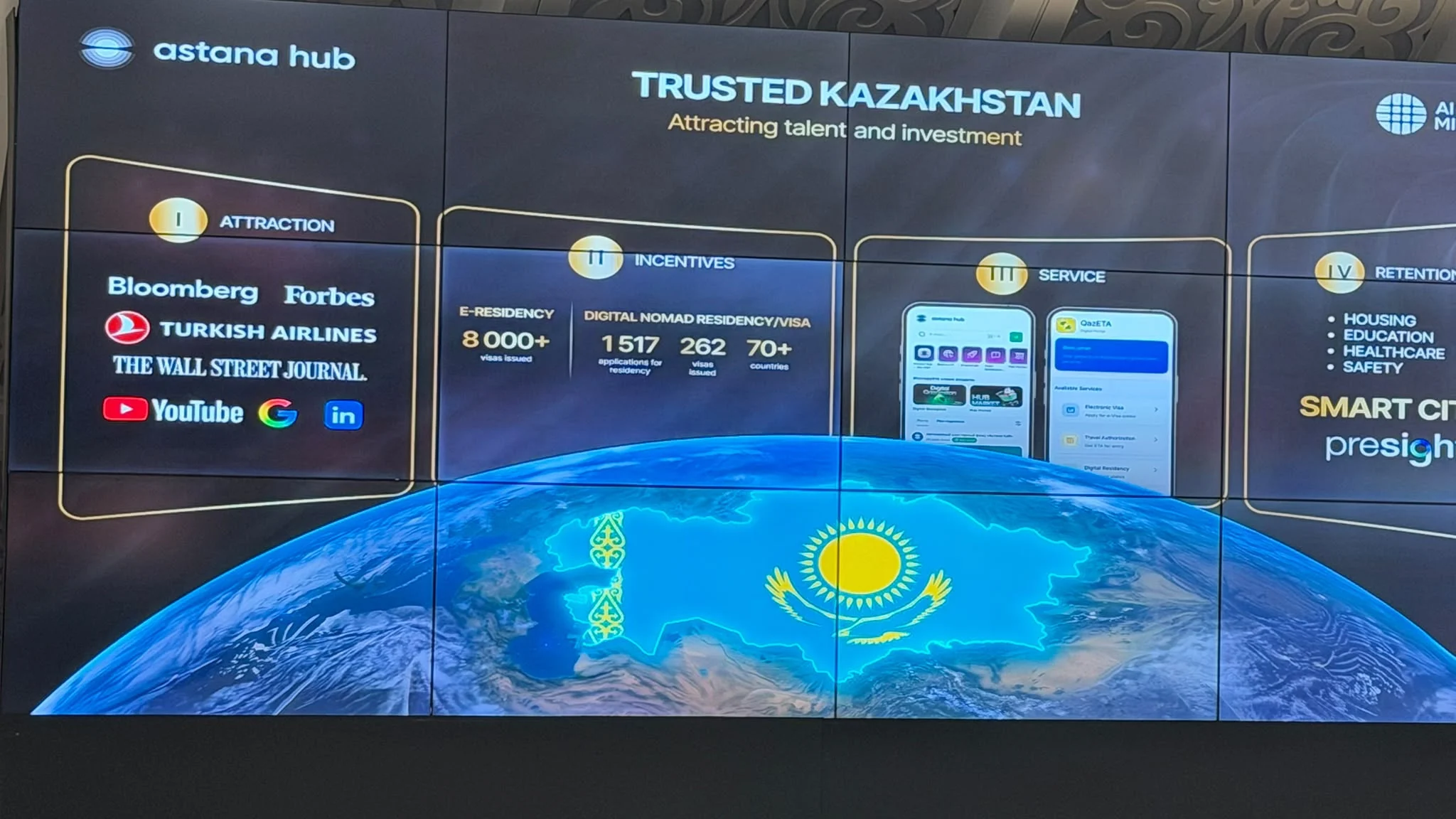
The benefit is substantial, but it comes with conditions. Among other requirements, the company must be incorporated in Kazakhstan and, since 2026, derive at least 90% of its revenue from technology activities classified as priorities. The status also provides access to a simplified regime for hiring foreign specialists, with work visas available for up to five years.
Astana Hub complements this tax framework with acceleration programs, financing mechanisms, workspace and partnerships with technology providers. Kazakhstan is therefore seeking to offer not only a cost advantage, but also a sufficiently structured environment for a foreign company to establish operations quickly.
In Ekibastuz, Electricity Is to Become Computing Power
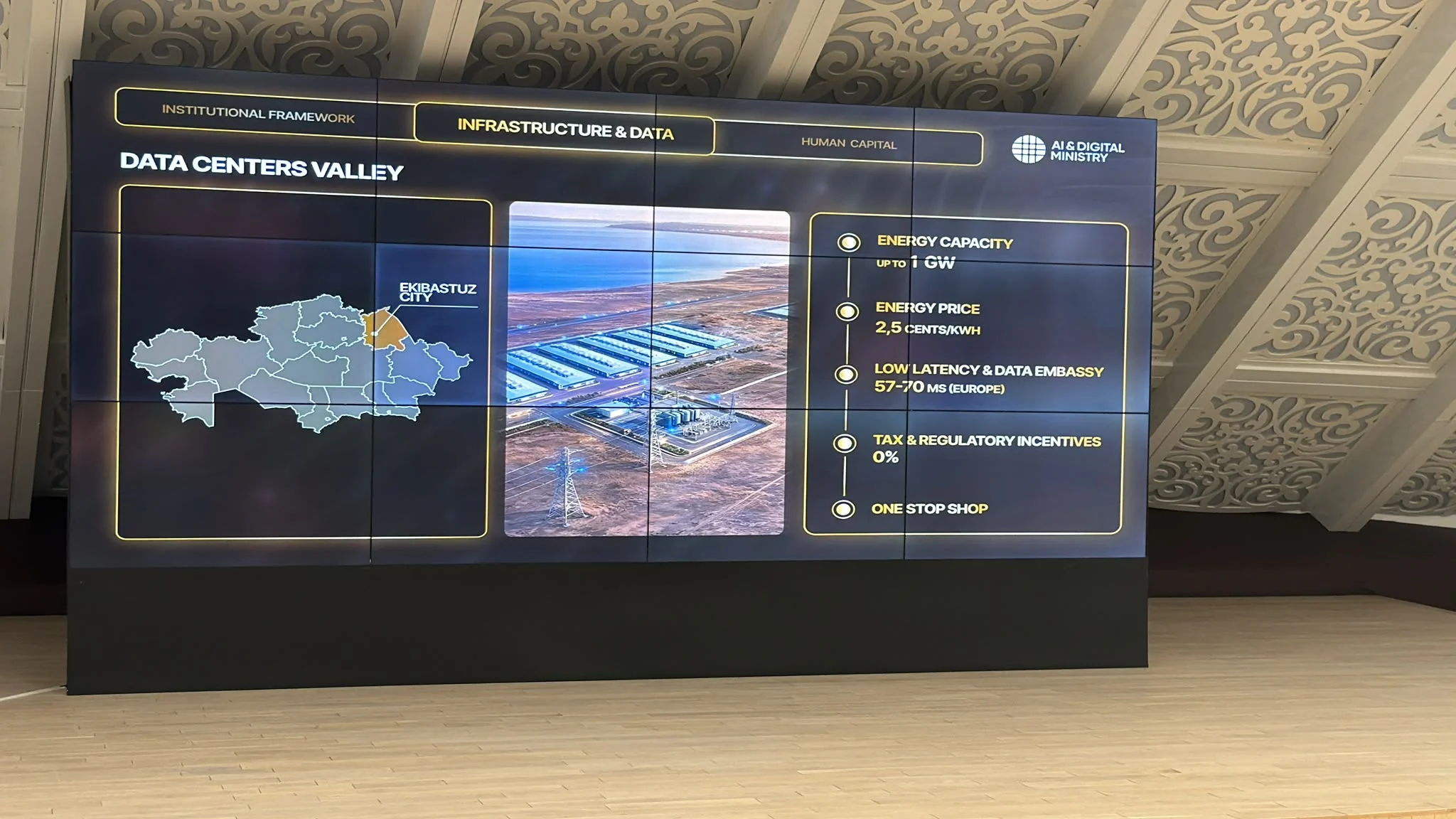
The most industrial component of this strategy is taking shape in Ekibastuz, in the Pavlodar region. The city, historically tied to power generation, is set to host the Data Center Valley, a vast campus designed for data centers, cloud infrastructure and high-performance AI computing.
The project is designed to reach 1 gigawatt (GW) of electrical capacity – roughly the amount of power needed to send the DeLorean through time in Back to the Future, where the magic number is 1.21 GW. In January 2026, the government announced an initial 300 MW of infrastructure, with capacity to be expanded gradually to the full gigawatt. By August, construction had begun on a first 50 MW site, scheduled to enter service in June 2027. During the ministerial presentation, officials also highlighted an electricity price of 2.5 cents per kWh and advertised latency of 57 to 70 milliseconds to Europe.
The choice of Ekibastuz follows a clear economic logic. AI infrastructure consumes enormous amounts of electricity; as GPU clusters grow, access to energy is becoming as important as access to the processors themselves. Kazakhstan has substantial generating capacity and intends to turn that advantage into exportable digital activity.
The project is also beginning to move beyond institutional announcements. In June, the government announced a package of agreements with US-based Firebird and NVIDIA covering advanced computing infrastructure. It also says that 300 MW is already available for the campus’s phased development.
A Highly Digitized Domestic Market
This infrastructure policy is built on another advantage: a public administration that is already highly digitized.
According to the Kazakh government, 92% of public services are now available online. In 2024, 341 million public services were delivered, 91% of them electronically.
The next step is to weave more artificial intelligence into that digital state infrastructure. Documents presented by the ministry lay out an explicit progression: eGov, then eGov + AI, and finally eGov GPT. In other words, the state does not merely want to attract technology providers; it also intends to become a customer for their solutions.
A Distinctive Position Between Europe and Asia
Kazakhstan is not trying to replicate the ecosystems of Silicon Valley, London or Singapore. Its strategy is built on advantages more directly tied to its geography and economy: abundant energy, low-cost land, a position between Europe and Asia, a favorable tax environment and a political willingness to invest in digital infrastructure.
Ask AI about this story
Answers are based on this article and SN Media’s related coverage. AI can make mistakes.
Continue the story
 BACKGROUND · How we got here
Astana Puts Artificial Intelligence at the Center of Kazakhstan’s Regional Ambitions
BACKGROUND · How we got here
Astana Puts Artificial Intelligence at the Center of Kazakhstan’s Regional Ambitions